





Version française Groupes de recherche et projets thématiques
Who cares? De la psychiatrie dans l'aire anglophone
 Le projet transversal “Who cares? De la psychiatrie dans l’aire anglophone” est porté par 4 enseignantes-chercheuses de l’Université Paris Nanterre : Cécile Birks, Claire Deligny, Laurence Dubois (OAB / HP2A) et Elisabeth Fauquert (Politiques Américaines) et une enseignante-chercheuse de la Sorbonne Nouvelle : Laetitia Sansonetti (PRISMES).
Ce projet comporte deux axes:
Projet de traduction collaborative de l’ouvrage de WAF Browne What Asylums are, were and ought to be, publié en 1837, réédité en anglais par Andrew Scull dans une version critique au début des années 1990 (The asylum as Utopia : W.A.F. Browne and the mid-nineteenth century consolidation of psychiatry / edited by Andrew Scull. London , New York: Routledge, 1990) mais inédit dans sa version française.
Colloque international en trois volets :
Février 2025 : “People and Places”
Mars 2026 : “Theories and Policies”
Mars 2027 : “Circulations and Transfers”.
Les ambitions du colloque “Who Cares?” :
Créer un lieu d’échange interdisciplinaire et international sur la psychiatrie dans l’aire anglophone
Etablir un nouveau réseau de recherche pérenne sur le sujet
Renforcer le rayonnement de l’OAB, du CREA et de l’Université Paris Nanterre dans ce domaine.
Outre la mise en valeur de ses activités permanentes de recherche, le groupe a vocation à faciliter les liens avec les autres disciplines qui travaillent sur l’histoire de la psychiatrie (psychologie, médecine etc….) et avec d’autres groupes existants, notamment : la SFHSH (Société française pour l’histoire des sciences de l’homme), le groupe History of Science, Medicine and Technology Research Group (University of Edinburgh), la Society for the Social History of Medicine (Oxford University), et le séminaire d’histoire de la psychiatrie de l’Hôpital Sainte Anne.
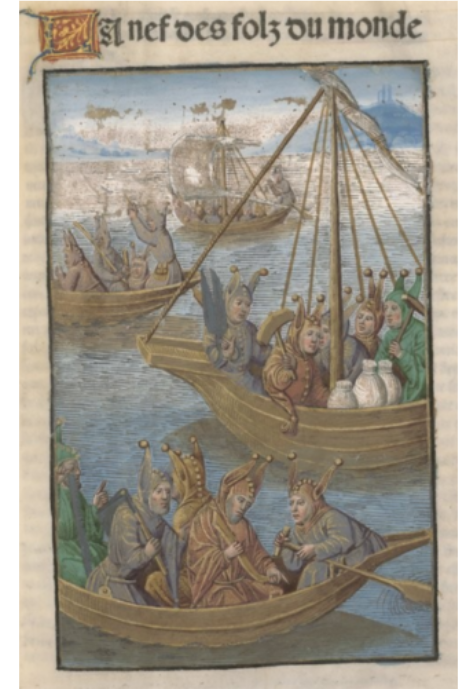
Call for Papers – International conference Who Cares ? Psychiatry in the English-speaking world
#3 Circulations and Transfers
Université Paris Nanterre
4-6 March 2027
Our third and last conference will take place on 4-6 March 2027 at Paris Nanterre and the theme will be “Circulations and Transfers”.
This Call for Papers therefore invites contributions that critically engage with the theme of our third event: Circulations and Transfers (4-6 March 2027).
————-
The history of psychiatry raises the question of its disciplinary breadth, which Jan Goldstein once attributed to the very nature of psychiatry, an old discipline somehow “lack[ing] the stability that age would seem to confer” (Goldstein, 1993, p. 1368). While it was originally written by psychiatrists and healthcare professionals (most famously, Ida Macalpine and Richard Hunter), it also increasingly caught the attention of scholars in social, cultural and intellectual history, as well as historians of science and medicine from the 1970s-80s onwards.
The term “psychiatry” is to be taken in the broadest sense of the word, as defined by historian Roy Porter – a discipline which is “as old as the hills if we treat it as a portmanteau term for all attempts to minister to minds diseased” (Porter, 1990, p. 169). This approach is perfectly in line with the definition from the Oxford English Dictionary, presenting psychiatry as the “branch of medicine concerned with the causes, diagnosis, treatment and prevention of mental illness”. Though the term “psychiatre” was used in French as early as 1802, the word “psychiatrist” only appeared much later in the English language, in 1875, while “psychiatry” seems to have been in use since 1846. This does not mean however that the phrase “history of psychiatry” should only apply from the 19th century onwards, and it is entirely justified when dealing with any historical research on the treatment of the mentally ill. The case of Bethlem Royal Hospital (“Bedlam”) in London, that was founded in 1247 as a monastery, then transformed into a hospital and is still considered today as the oldest “psychiatric” hospital in the world, provides a perfect example of the existence of psychiatric practices even before the coining of the term.
Far from being a mere play on words, the polysemy in our project title “Who cares?” raises the question of the attention paid to the patient in the therapeutic relationship, or their neglect. Evoking the feeling of incomprehension, contempt or indifference that the patient may feel during therapy, it highlights the gap between the medical professional’s perspective, often focused on pathology, and the patient’s subjective experience. On the other hand, questioning the subject of care, it underlines the possible failure of caregivers to treat certain aspects of the illness, deemed secondary or negligible. It also questions the attention granted to the mentally ill and the respect (or lack thereof) shown towards them by the public at large, an attitude that is intricately linked to the perceptions and mentalities of a given society at a certain period of time, making it a genuine social and historical issue. What is more, the question “Who cares?” is intended as a reflection on the place, the role and the recognition of the history of psychiatry in the wider field of the social and political history of the English-speaking world.
The 2027 conference theme “Circulations & Transfers” seeks to contribute to recent historiographical work examining psychiatric knowledge, practices, institutions, material objects, diagnostic categories, and the people involved in their production, dissemination, and reception across borders and/or institutional and extra-institutional settings in the English-speaking world. Rather than viewing the history of psychiatry as a succession of isolated national traditions, this perspective emphasises the interconnected processes through which psychiatric ideas, practices, institutions, and experiences of mental illness have been exchanged, adapted, negotiated, and sometimes resisted.
Circulations refer to the movement of knowledge, practices, objects, and people across different spaces. Global historians of science have drawn on this concept to move beyond Eurocentric accounts by demonstrating that ideas and practices did not circulate exclusively according to a unilateral centre–periphery model (for example, from colonial powers to their colonies). Transfers, which may be understood as a more specific form of circulation, are processes through which a particular object, person, theory, practice, institutional model, or diagnostic category is moved from one context to another, often during a specific period.
In both cases, these processes may be understood as transformative. As Claude Markovits, Jacques Pouchepadass, and Sanjay Subrahmanyam observed in 2006:
“Circulation is different from simple mobility, inasmuch as it implies a double movement of going back and forth and coming back, which can be repeated indefinitely. In circulating, things, men and notions often transform themselves.” (Markovits et al., 2006, pp. 2-3)
From this perspective, circulations and transfers imply that knowledge, practices and objects may be reshaped through movement, translation, mediation, and encounter (Secord; Raj). This stands in contrast to Bruno Latour’s concept of “immutable mobiles,” whereby scientific objects can travel while remaining relatively stable, enabling knowledge to circulate without being fundamentally transformed (Latour).
Applied to the history of psychiatry, these concepts have encouraged historians to move beyond national frameworks and examine the transnational dimensions of psychiatric knowledge and practice. Early studies explored the development of national psychiatric traditions (Porter and Wright). Since the 2010s, a growing body of scholarship has investigated networks, connections, and exchanges in the history of psychiatry. This work has examined the circulation of therapeutic models and treatments—including psychotherapy, shock therapies, and coma-induced therapies—and their adaptation to local contexts (Ernst and Mueller). It has also explored tours undertaken by psychiatrists and/or architects to study asylum architecture and practices of care at national and international levels (Ellis; Deligny and Malathouni).
Other influential studies have examined circulations and transfers within imperial settings, focusing on the movement of people, psychiatric practices, and institutional models, as well as their local appropriations and transformations in Africa, Oceania, and India (Mahone and Vaughan; Coleborne; Mishra; Ernst). It will also be interesting to examine how psychiatric theories and practices were transferred from Great Britain to its dominions and how they circulated first within the Commonwealth and later in postcolonial spaces. For example, at the turn of the 19th century in South Africa, psychiatrists trained at the university of Edinburgh in Scotland played a key role in establishing a mental health system largely modelled on British standards. In this regard, patient transfers were very common, in order to ensure strict racial segregation between whites only institutions and those for black, coloured or Indian people (Deacon; Parle; Swartz).
Questions of translation also form an important dimension of circulations and transfers. Foundational works such as Philippe Pinel’s Treatise on Insanity (1806), which mentioned the work of Alexander Crichton as a gateway to studies written in English and German (Traité médico-philosophique sur l’aliénation mentale, 1800-1801, xxi, 81, 112) and Jean-Etienne Esquirol’s Observations on the Illusions of the Insane (1833 / Des illusions chez les aliénés, 1832 – see also Esquirol 1838/1845) were translated into English, but much work in German, and in French, the two languages in which many among the first texts on psychiatry were written, still remains unavailable to Anglophone readerships, including future professionals in need of a historicised perspective on the discipline (Park and Weleff). As argued by Jean Garrabé, uneven translation practices have limited the circulation of many psychopathological concepts (Garrabé). Studying the history of the circulation of psychiatric terminology helps explain how and why certain concepts were transformed, forgotten, or replaced over time. The development of psychiatry as an international yet Europe- and North-America-centred discipline has led to a dominance of English as the international language for communication in this field, which may explain why some key works have not been translated into French. This is the case of William A. F. Browne’s 1837 What Asylums Were, Are, and Ought to Be, among others, despite its enduring value.
As scholars of cultural psychiatry and global mental health have shown, the global circulation of psychiatric categories has been neither straightforwardly standardising nor uncontested. The diffusion of the DSM sparked continuing debates over the universal applicability of Europe- and North-America-centred diagnostic frameworks, the medicalisation of distress, and the unequal power relations underpinning the transnational circulation of psychiatric expertise (Kleinman 1995 and 1997a; Watters). Whether it be in nineteenth-century China (with John Kerr’s “Refuge for the Insane” in Canton), postcolonial Uganda (Orley) or today’s Nepal (Acharya et al.), translating lexicons involves adapting representations of illnesses and disorders to cultures which rely on completely different concepts of what the human “psyche” is. Diagnostic concepts and therapeutic strategies have therefore been continually translated, negotiated, and reconfigured as they encountered different conceptions of personhood and suffering, revealing the historicity, instability, and co-production of seemingly universal psychiatric categories (Kleinman 1997b; Bemme and Kirmayer).
The study of circulations and transfers in the history of psychiatry may also lead to an examination of the reception of certain practices and concepts, including forms of resistance. As Fernand Braudel observed in 1959, “not all exchanges are self-evident; there are indeed cases in which borrowing was resisted” (Braudel, 1969, p. 293). Historians have fruitfully explored such dynamics in colonial contexts (Mahone and Vaughan; Coleborne; Ernst; Smith) and, more broadly, in international settings. Resistance to innovative practices imported from foreign countries could also be a real obstacle to their application, leading to a blunt rejection of a therapeutic model and creating tensions; the example of non-restraint and the strong opposition it met in France speaks volumes in this regard, as explained by Roy Porter: “despite Pinel’s striking off of the chains, absolute non-restraint was seen by Continental reformers as a quixotically English idée fixe, a foible of doctrinaire liberalism, and it was little imitated” (Porter, 2002, pp. 115-116). Rivalry between different nations could play a major role in the failure of circulations and transfers -but can also be considered as a paradoxical form or circulation – and competition could also be part of the process, as when Etienne Esquirol denounced England as a “jealous and rival nation”, the English being blamed for “taking credit for a discovery that was not theirs” (Esquirol, 1805, p. 7).
Circulations and transfers may also be studied at national, regional, and local levels (Ellis; Rollin and Reynolds). This conference therefore strongly encourages proposals that explore exchanges operating across different geographical scales and institutional settings. The circulation between asylums, prisons and workhouses as Poor Law Institutions in Britain in the 19th century is a valid illustration of the interconnection and circularity of social governance and the British system of poor relief and “any reasonably complete account of the way in which the insane were dealt with in the nineteenth century must take into account the important role played by the poor law and its local systems” (Miller, 2007, p. 36). Asylums, prisons and workhouses were part of the same system as “they were, after all, administered by the same persons”. (Bartlett) Transfers from the workhouse to the asylum were a constant feature and one of the official duties of the Commissioners in Lunacy was indeed to arrange for the transfer of all mentally ill people accommodated in workhouses to the county asylum whenever possible (Hodgkinson). Prisoners being transferred to lunatic asylums was also quite frequent, and their re-categorisation from “prisoners” to “patients” (thoroughly documented by Cox and Marland) demonstrates the fluid nature of such categories and the complementary roles of both institutions. This complementary nature is also evident in a more tangible way on a professional level, as many members of asylum staff moved from one institution to another, frequently leaving a post in prison to get a job in an asylum, or vice-versa (Wright).
The political dimension of psychiatric care should also be acknowledged, as therapeutic choices were rarely devoid of any ideological or political stance. Reformers often moved in complementary circles with porous boundaries. The combined influence of utilitarianism, utopian socialism, unitarianism, evangelicalism and even Chartism on the 19th-century lunacy reform movement and its implementation in lunatic asylums has been demonstrated in the British context (Dubois) and the anti-psychiatry movement that emerged in Britain and the US in the 1960s did not just question psychiatric care but challenged the social order as a whole (Szasz; Wall; Cooper).
Finally, the concept of circulation can also be used to analyse how psychiatric and scientific discourses moved beyond professional circles and were integrated into other non-professional media (literature, the press). Such approaches invite us to consider not only the circulation of expert knowledge but also its reception by the general public, via the construction of popular science for instance (Cooter). This may also encourage studies of visits to the institutions by families and friends, journalists, external visitors, etc., who, while not involved in the management of these institutions, nevertheless engaged with them and disseminated discourses based on their impressions and experiences (Mooney and Reinarz; Miron; Coleborne).
This international conference, to be held at Université Paris Nanterre on 4-6 March 2027, will thus welcome all historical approaches to psychiatry and more generally to the treatment of mental illness which reflect on the topic “Circulations & Transfers” from the Middle Ages to the end of the 20th century in English-speaking countries.
We invite proposals on “Circulations & Transfers” to be submitted by 20 September 2026.
Paper proposals (20-minute presentation format), written in English (approximately 250 words) and accompanied by a short biographical note in a single Word document, should be sent to
whocaresconference@gmail.com
Please note this Call for Papers is for in-person presentations only.
The presentations will be exclusively in English.
Topics may include (but are not limited to):
“Getting out of the Asylum” : physical transfer and circulations of patients between institutions and other places of care and/or going back home
Transfers of patients and/or staff initiated in times of crisis or emergency e. g. wartime conditions
Circulation of professionals/staff from one institution to another / other places of care or confinement
Circulation of external visitors in and out of institutions (18th-19th-century asylum tourism, journalistic practices, visits from friends and relatives, etc.)
Circulation of ideas and theories on the treatment of mental illness and diagnostic categories
Circulation of clinical practices and therapeutic techniques
The role of translation and language in psychiatry at an international level
Material histories of psychiatry (circulating objects, drugs, devices, archives)
Resistance, failure, distortion in the reception and adaptation of ideas/practices
The construction of local/regional/national/international networks (e.g. international organisations, congresses etc.)
The politics of dissemination of psychiatric knowledge (media, publishing)
Colonial and postcolonial circulations of psychiatric knowledge and institutions
Influence of political opinions on psychiatric practices: no-restraint, therapeutic communities, anti-psychiatry, care in the community …
Selected bibliography:
https://whocares.hypotheses.org/selected-bibliography-circulations-transfers-2027
Conference organisers:
Cécile Birks, Claire Deligny, Laurence Dubois (Observatoire de l’aire britannique), Elisabeth Fauquert (Politiques américaines/ORUS), CREA Nanterre, and Laetitia Sansonetti (Prismes, Sorbonne Nouvelle).
Scientific committee:
Cécile Birks (Université Paris Nanterre)
Claire Deligny (Université Paris Nanterre)
Laurence Dubois (Université Paris Nanterre)
Elodie Edwards-Grossi (Université Paris Dauphine-PSL & Institut Universitaire de France)
Elisabeth Fauquert (Université Paris Nanterre)
Anatole Le Bras (Université Versailles Saint-Quentin-en-Yvelines)
Julie Le Gac (Université Paris Nanterre & Institut Universitaire de France)
Fabienne Moine (Université Paris-Est Créteil)
Michel Prum (Université Paris Cité)
Laetitia Sansonetti (Université Sorbonne Nouvelle)
This Call for Papers therefore invites contributions that critically engage with the theme of our third event: Circulations and Transfers (4-6 March 2027).
————-
The history of psychiatry raises the question of its disciplinary breadth, which Jan Goldstein once attributed to the very nature of psychiatry, an old discipline somehow “lack[ing] the stability that age would seem to confer” (Goldstein, 1993, p. 1368). While it was originally written by psychiatrists and healthcare professionals (most famously, Ida Macalpine and Richard Hunter), it also increasingly caught the attention of scholars in social, cultural and intellectual history, as well as historians of science and medicine from the 1970s-80s onwards.
The term “psychiatry” is to be taken in the broadest sense of the word, as defined by historian Roy Porter – a discipline which is “as old as the hills if we treat it as a portmanteau term for all attempts to minister to minds diseased” (Porter, 1990, p. 169). This approach is perfectly in line with the definition from the Oxford English Dictionary, presenting psychiatry as the “branch of medicine concerned with the causes, diagnosis, treatment and prevention of mental illness”. Though the term “psychiatre” was used in French as early as 1802, the word “psychiatrist” only appeared much later in the English language, in 1875, while “psychiatry” seems to have been in use since 1846. This does not mean however that the phrase “history of psychiatry” should only apply from the 19th century onwards, and it is entirely justified when dealing with any historical research on the treatment of the mentally ill. The case of Bethlem Royal Hospital (“Bedlam”) in London, that was founded in 1247 as a monastery, then transformed into a hospital and is still considered today as the oldest “psychiatric” hospital in the world, provides a perfect example of the existence of psychiatric practices even before the coining of the term.
Far from being a mere play on words, the polysemy in our project title “Who cares?” raises the question of the attention paid to the patient in the therapeutic relationship, or their neglect. Evoking the feeling of incomprehension, contempt or indifference that the patient may feel during therapy, it highlights the gap between the medical professional’s perspective, often focused on pathology, and the patient’s subjective experience. On the other hand, questioning the subject of care, it underlines the possible failure of caregivers to treat certain aspects of the illness, deemed secondary or negligible. It also questions the attention granted to the mentally ill and the respect (or lack thereof) shown towards them by the public at large, an attitude that is intricately linked to the perceptions and mentalities of a given society at a certain period of time, making it a genuine social and historical issue. What is more, the question “Who cares?” is intended as a reflection on the place, the role and the recognition of the history of psychiatry in the wider field of the social and political history of the English-speaking world.
The 2027 conference theme “Circulations & Transfers” seeks to contribute to recent historiographical work examining psychiatric knowledge, practices, institutions, material objects, diagnostic categories, and the people involved in their production, dissemination, and reception across borders and/or institutional and extra-institutional settings in the English-speaking world. Rather than viewing the history of psychiatry as a succession of isolated national traditions, this perspective emphasises the interconnected processes through which psychiatric ideas, practices, institutions, and experiences of mental illness have been exchanged, adapted, negotiated, and sometimes resisted.
Circulations refer to the movement of knowledge, practices, objects, and people across different spaces. Global historians of science have drawn on this concept to move beyond Eurocentric accounts by demonstrating that ideas and practices did not circulate exclusively according to a unilateral centre–periphery model (for example, from colonial powers to their colonies). Transfers, which may be understood as a more specific form of circulation, are processes through which a particular object, person, theory, practice, institutional model, or diagnostic category is moved from one context to another, often during a specific period.
In both cases, these processes may be understood as transformative. As Claude Markovits, Jacques Pouchepadass, and Sanjay Subrahmanyam observed in 2006:
“Circulation is different from simple mobility, inasmuch as it implies a double movement of going back and forth and coming back, which can be repeated indefinitely. In circulating, things, men and notions often transform themselves.” (Markovits et al., 2006, pp. 2-3)
From this perspective, circulations and transfers imply that knowledge, practices and objects may be reshaped through movement, translation, mediation, and encounter (Secord; Raj). This stands in contrast to Bruno Latour’s concept of “immutable mobiles,” whereby scientific objects can travel while remaining relatively stable, enabling knowledge to circulate without being fundamentally transformed (Latour).
Applied to the history of psychiatry, these concepts have encouraged historians to move beyond national frameworks and examine the transnational dimensions of psychiatric knowledge and practice. Early studies explored the development of national psychiatric traditions (Porter and Wright). Since the 2010s, a growing body of scholarship has investigated networks, connections, and exchanges in the history of psychiatry. This work has examined the circulation of therapeutic models and treatments—including psychotherapy, shock therapies, and coma-induced therapies—and their adaptation to local contexts (Ernst and Mueller). It has also explored tours undertaken by psychiatrists and/or architects to study asylum architecture and practices of care at national and international levels (Ellis; Deligny and Malathouni).
Other influential studies have examined circulations and transfers within imperial settings, focusing on the movement of people, psychiatric practices, and institutional models, as well as their local appropriations and transformations in Africa, Oceania, and India (Mahone and Vaughan; Coleborne; Mishra; Ernst). It will also be interesting to examine how psychiatric theories and practices were transferred from Great Britain to its dominions and how they circulated first within the Commonwealth and later in postcolonial spaces. For example, at the turn of the 19th century in South Africa, psychiatrists trained at the university of Edinburgh in Scotland played a key role in establishing a mental health system largely modelled on British standards. In this regard, patient transfers were very common, in order to ensure strict racial segregation between whites only institutions and those for black, coloured or Indian people (Deacon; Parle; Swartz).
Questions of translation also form an important dimension of circulations and transfers. Foundational works such as Philippe Pinel’s Treatise on Insanity (1806), which mentioned the work of Alexander Crichton as a gateway to studies written in English and German (Traité médico-philosophique sur l’aliénation mentale, 1800-1801, xxi, 81, 112) and Jean-Etienne Esquirol’s Observations on the Illusions of the Insane (1833 / Des illusions chez les aliénés, 1832 – see also Esquirol 1838/1845) were translated into English, but much work in German, and in French, the two languages in which many among the first texts on psychiatry were written, still remains unavailable to Anglophone readerships, including future professionals in need of a historicised perspective on the discipline (Park and Weleff). As argued by Jean Garrabé, uneven translation practices have limited the circulation of many psychopathological concepts (Garrabé). Studying the history of the circulation of psychiatric terminology helps explain how and why certain concepts were transformed, forgotten, or replaced over time. The development of psychiatry as an international yet Europe- and North-America-centred discipline has led to a dominance of English as the international language for communication in this field, which may explain why some key works have not been translated into French. This is the case of William A. F. Browne’s 1837 What Asylums Were, Are, and Ought to Be, among others, despite its enduring value.
As scholars of cultural psychiatry and global mental health have shown, the global circulation of psychiatric categories has been neither straightforwardly standardising nor uncontested. The diffusion of the DSM sparked continuing debates over the universal applicability of Europe- and North-America-centred diagnostic frameworks, the medicalisation of distress, and the unequal power relations underpinning the transnational circulation of psychiatric expertise (Kleinman 1995 and 1997a; Watters). Whether it be in nineteenth-century China (with John Kerr’s “Refuge for the Insane” in Canton), postcolonial Uganda (Orley) or today’s Nepal (Acharya et al.), translating lexicons involves adapting representations of illnesses and disorders to cultures which rely on completely different concepts of what the human “psyche” is. Diagnostic concepts and therapeutic strategies have therefore been continually translated, negotiated, and reconfigured as they encountered different conceptions of personhood and suffering, revealing the historicity, instability, and co-production of seemingly universal psychiatric categories (Kleinman 1997b; Bemme and Kirmayer).
The study of circulations and transfers in the history of psychiatry may also lead to an examination of the reception of certain practices and concepts, including forms of resistance. As Fernand Braudel observed in 1959, “not all exchanges are self-evident; there are indeed cases in which borrowing was resisted” (Braudel, 1969, p. 293). Historians have fruitfully explored such dynamics in colonial contexts (Mahone and Vaughan; Coleborne; Ernst; Smith) and, more broadly, in international settings. Resistance to innovative practices imported from foreign countries could also be a real obstacle to their application, leading to a blunt rejection of a therapeutic model and creating tensions; the example of non-restraint and the strong opposition it met in France speaks volumes in this regard, as explained by Roy Porter: “despite Pinel’s striking off of the chains, absolute non-restraint was seen by Continental reformers as a quixotically English idée fixe, a foible of doctrinaire liberalism, and it was little imitated” (Porter, 2002, pp. 115-116). Rivalry between different nations could play a major role in the failure of circulations and transfers -but can also be considered as a paradoxical form or circulation – and competition could also be part of the process, as when Etienne Esquirol denounced England as a “jealous and rival nation”, the English being blamed for “taking credit for a discovery that was not theirs” (Esquirol, 1805, p. 7).
Circulations and transfers may also be studied at national, regional, and local levels (Ellis; Rollin and Reynolds). This conference therefore strongly encourages proposals that explore exchanges operating across different geographical scales and institutional settings. The circulation between asylums, prisons and workhouses as Poor Law Institutions in Britain in the 19th century is a valid illustration of the interconnection and circularity of social governance and the British system of poor relief and “any reasonably complete account of the way in which the insane were dealt with in the nineteenth century must take into account the important role played by the poor law and its local systems” (Miller, 2007, p. 36). Asylums, prisons and workhouses were part of the same system as “they were, after all, administered by the same persons”. (Bartlett) Transfers from the workhouse to the asylum were a constant feature and one of the official duties of the Commissioners in Lunacy was indeed to arrange for the transfer of all mentally ill people accommodated in workhouses to the county asylum whenever possible (Hodgkinson). Prisoners being transferred to lunatic asylums was also quite frequent, and their re-categorisation from “prisoners” to “patients” (thoroughly documented by Cox and Marland) demonstrates the fluid nature of such categories and the complementary roles of both institutions. This complementary nature is also evident in a more tangible way on a professional level, as many members of asylum staff moved from one institution to another, frequently leaving a post in prison to get a job in an asylum, or vice-versa (Wright).
The political dimension of psychiatric care should also be acknowledged, as therapeutic choices were rarely devoid of any ideological or political stance. Reformers often moved in complementary circles with porous boundaries. The combined influence of utilitarianism, utopian socialism, unitarianism, evangelicalism and even Chartism on the 19th-century lunacy reform movement and its implementation in lunatic asylums has been demonstrated in the British context (Dubois) and the anti-psychiatry movement that emerged in Britain and the US in the 1960s did not just question psychiatric care but challenged the social order as a whole (Szasz; Wall; Cooper).
Finally, the concept of circulation can also be used to analyse how psychiatric and scientific discourses moved beyond professional circles and were integrated into other non-professional media (literature, the press). Such approaches invite us to consider not only the circulation of expert knowledge but also its reception by the general public, via the construction of popular science for instance (Cooter). This may also encourage studies of visits to the institutions by families and friends, journalists, external visitors, etc., who, while not involved in the management of these institutions, nevertheless engaged with them and disseminated discourses based on their impressions and experiences (Mooney and Reinarz; Miron; Coleborne).
This international conference, to be held at Université Paris Nanterre on 4-6 March 2027, will thus welcome all historical approaches to psychiatry and more generally to the treatment of mental illness which reflect on the topic “Circulations & Transfers” from the Middle Ages to the end of the 20th century in English-speaking countries.
We invite proposals on “Circulations & Transfers” to be submitted by 20 September 2026.
Paper proposals (20-minute presentation format), written in English (approximately 250 words) and accompanied by a short biographical note in a single Word document, should be sent to
whocaresconference@gmail.com
Please note this Call for Papers is for in-person presentations only.
The presentations will be exclusively in English.
Topics may include (but are not limited to):
“Getting out of the Asylum” : physical transfer and circulations of patients between institutions and other places of care and/or going back home
Transfers of patients and/or staff initiated in times of crisis or emergency e. g. wartime conditions
Circulation of professionals/staff from one institution to another / other places of care or confinement
Circulation of external visitors in and out of institutions (18th-19th-century asylum tourism, journalistic practices, visits from friends and relatives, etc.)
Circulation of ideas and theories on the treatment of mental illness and diagnostic categories
Circulation of clinical practices and therapeutic techniques
The role of translation and language in psychiatry at an international level
Material histories of psychiatry (circulating objects, drugs, devices, archives)
Resistance, failure, distortion in the reception and adaptation of ideas/practices
The construction of local/regional/national/international networks (e.g. international organisations, congresses etc.)
The politics of dissemination of psychiatric knowledge (media, publishing)
Colonial and postcolonial circulations of psychiatric knowledge and institutions
Influence of political opinions on psychiatric practices: no-restraint, therapeutic communities, anti-psychiatry, care in the community …
Selected bibliography:
https://whocares.hypotheses.org/selected-bibliography-circulations-transfers-2027
Conference organisers:
Cécile Birks, Claire Deligny, Laurence Dubois (Observatoire de l’aire britannique), Elisabeth Fauquert (Politiques américaines/ORUS), CREA Nanterre, and Laetitia Sansonetti (Prismes, Sorbonne Nouvelle).
Scientific committee:
Cécile Birks (Université Paris Nanterre)
Claire Deligny (Université Paris Nanterre)
Laurence Dubois (Université Paris Nanterre)
Elodie Edwards-Grossi (Université Paris Dauphine-PSL & Institut Universitaire de France)
Elisabeth Fauquert (Université Paris Nanterre)
Anatole Le Bras (Université Versailles Saint-Quentin-en-Yvelines)
Julie Le Gac (Université Paris Nanterre & Institut Universitaire de France)
Fabienne Moine (Université Paris-Est Créteil)
Michel Prum (Université Paris Cité)
Laetitia Sansonetti (Université Sorbonne Nouvelle)
CONFERENCE PROGRAMME
Who Cares? International Conference
History of Psychiatry in the English-speaking world
#2 Theories & Policies
19-21 mars 2026
Salle des conférences du Bâtiment Max WEBER
Université Paris Nanterre
200 avenue de la République
92000 NANTERRE
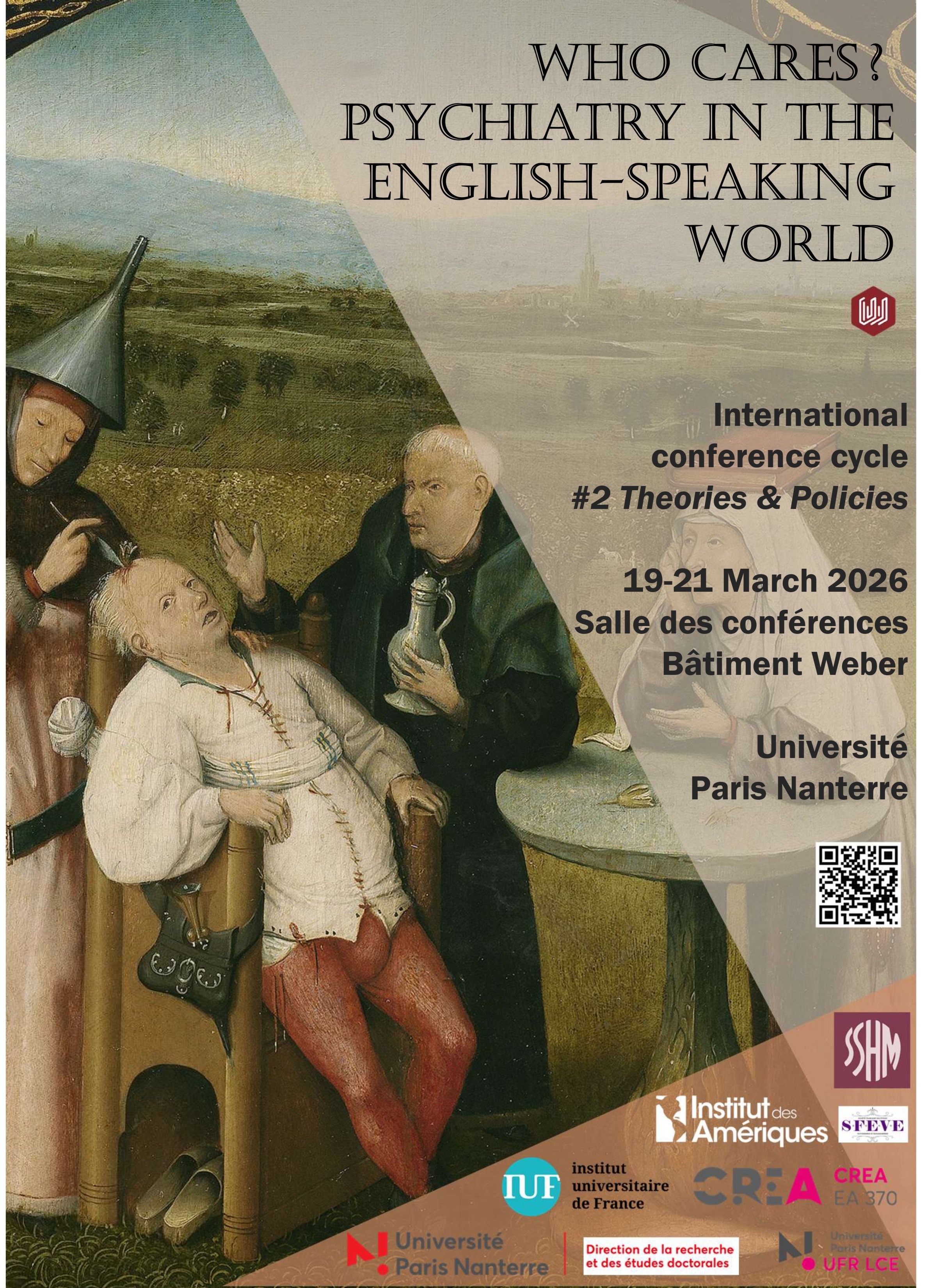
Conference programme
DAY 1: Thursday 19 March 2026
8.45 Welcome & registration
9-9.15 Opening speech, Françoise KRÁL (director of the CREA research laboratory, Université Paris Nanterre)
9.15-10.15: Keynote 1: Pr Andrew Scull (Emeritus Professor in Sociology, University of California San Diego):
“A Psychiatric Revolution”
Chair: Marie Derrien (Université de Lille)
10.15-10.30 Coffee break
10.30-12.30: PANEL 1: Decision-making and/in psychiatry
Chair: Charlotte Gould (Université Paris Nanterre)
Susan Barrett (Senior lecturer in British studies, Université Bordeaux Montaigne): “‘From a topic in itself uninviting and dry’ to the ‘burning injustices of mental health’: the evolution of the language around mental health used by British politicians, 1845-2025”
Louise Hide (Senior Honorary Research Fellow at Birkbeck, University of London) “From political resistance to opening the floodgates: what can we learn from NHS hospital inquiry records from the late 1960s-1970s?”
Susan Hogan (Professor in Arts and Health, University of Derby), “Social prescribing: policy and practice”
Elisabeth Fauquert (Senior lecturer in American studies, Université Paris Nanterre), “Peers not Police: US Psychiatric First Response Reform since the creation of 911”
12.30-2: Lunch break (buffet)
2-3: PANEL 2: Psychiatry, decolonisation and racial bias
Chair: Michel PRUM (Université Paris Cité)
Rory Du Plessis (Associate Professor, School of Arts, University of Pretoria): “British theorising on Boer insanity during the South African War”
Cécile Birks (Senior lecturer in British and Commonwealth studies, Université Paris Nanterre): “The eugenic interlude in South African mental health institutions, 1900-1948”
3.-3.20 Coffee break
3.20-4.20 : PANEL 3: Religion
Chair: Claire LABARBE (Université Paris Nanterre)
Samuel Binkley (Professor of Sociology, Emerson College), “The Inner Light of Christ and the Medical Personage: A Quaker Reading of the Birth of the Asylum”
Rachel Ditchfield (PhD candidate, University of Liverpool/Imperial War Museum), “Ministering to the mind diseased: the role of the chaplain in medico-moral model of late-nineteenth-century asylum”
4.20-5: Psychopathological artworks in translation – a virtual exhibition by Master’s students in Translation Studies from Université Sorbonne Nouvelle
5.15-7.30 : Cocktail / Poster presentations: French translations of a selection of poems from Rory Du Plessis’s collection I See You by Master’s students in Translation Studies from Université Sorbonne Nouvelle
DAY 2: Friday 20 March 2026
9.15-10.45: Guided tour of the medical library at Sainte-Anne Psychiatric Hospital: Bibliothèque Henri Ey , 1 rue Cabanis 75014 Paris
12-1.30: Back to Nanterre Lunch break (buffet)
1.30-3.10: PANEL 4: Psychiatry, politics and crime
Chair: Julie LE GAC (Université Paris Nanterre, IUF)
Helen Goodman (Postdoctoral researcher, Bath Spa University): “Assassination and attempted regicide: the certification, treatment, and punishment of criminal insanity in Britain and in the US, from Queen Victoria to JFK”
Laurence Dubois (Senior lecturer in British studies, Université Paris Nanterre): “‘It is unjust to ordinary patients to associate them with persons branded with crime’: the political and medical debate on the necessity of establishing separate asylums for criminal lunatics in mid-Victorian Britain”
Alice Béja (Associate Professor in US-American studies, Sciences Po Lille): “‘There is comradeship in the depths’: mental health and the politics of care in US anarchist communities at the turn of the 20th century”
3.10-3.30 Coffee break
3.30-5.30: PANEL 5: Diagnosis and treatment
Chair: Fabienne MOINE (Université Paris-Est Créteil)
Hilary Marland (Emeritus Professor in History, University of Warwick): “ ‘She resembles both a puerperal & an alcoholic confusion’: insanity, childbirth and diagnosis at Rainhill Asylum, Liverpool, c. 1900
Will Slauter (Professor in Anglophone studies, Sorbonne Université): “Reminiscence Therapy: Origins, Applications, and Controversies”
Nicolas Schwalbe (ATER adjunct lecturer in the Department of Psychoanalytic Studies, Université Paris Cité, and psychoanalyst), “Patient testimony as political theory: James Frame, no-restraint, and the politics of nineteenth-century Scottish psychiatry”
Dinner in town
DAY 3: Saturday 21 March 2026
9.15-9.30 Welcome (back) coffee
9.30-10-30: Keynote 2: Professor Erika Dyck (Canada Research Chair in the History of Medicine, University of Saskatchewan), “Psychiatry, the RCT, and Drug Policy: the Case of Psychedelics”
Chair: Elisa Chelle (Université Paris Nanterre)
10.30-10.45 Coffee break
10.45-11.45: PANEL 6: (Dis) placement in British psychiatry
Chair: Elisa Chelle (Université Paris Nanterre)
Léna Monème (PhD candidate in history, University of Luxembourg): “The refugee and immigrant dichotomy in British psychiatry, 1945-1965”
Claire Deligny (Senior lecturer in British studies, Université Paris Nanterre): “War from the wards: the Lancashire asylums and the Great War (1914-1922)”
11.45-12: Closing speech, by the Who Cares committee members
———————————————————————————————–
Conference organisers:
Cécile Birks, Claire Deligny, Laurence Dubois (Observatoire de l’aire britannique, Université Paris Nanterre), Elisabeth Fauquert (ORUS, Université Paris Nanterre) and Laetitia Sansonetti (Prismes, Université Sorbonne Nouvelle).
Scientific committee :
Cécile Birks, Claire Deligny, Laurence Dubois and Elisabeth Fauquert (Université Paris Nanterre)
Elodie Edwards-Grossi (Université Paris Dauphine-PSL & Institut Universitaire de France)
Hervé Guillemain (Le Mans Université)
Anatole Le Bras (Université Versailles Saint-Quentin-en-Yvelines)
Julie Le Gac (Université Paris Nanterre & Institut Universitaire de France)
Fabienne Moine (Université Paris-Est Créteil)
Michel Prum (Université Paris Cité)
Laetitia Sansonetti (Université Sorbonne Nouvelle)
Call for Papers – International conference Who Cares ? Psychiatry in the English-speaking world
#2 Theories and Policies
Université Paris Nanterre
19-21 March 2026
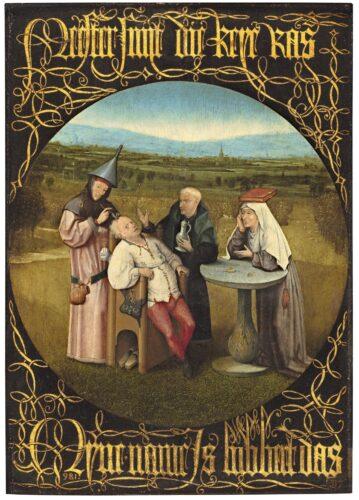
Après le premier volet de notre cycle "Who cares? Psychiatry in the English-Speaking world" qui a eu lieu en février dernier sur le thème "People and Places" , vous trouverez en cliquant sur ce lien un appel à communication pour notre colloque n°2 "Who cares? Psychiatry in the English-Speaking world : Theories and Policies", qui se tiendra du 19 au 21 mars 2026 à l'Université Paris Nanterre.
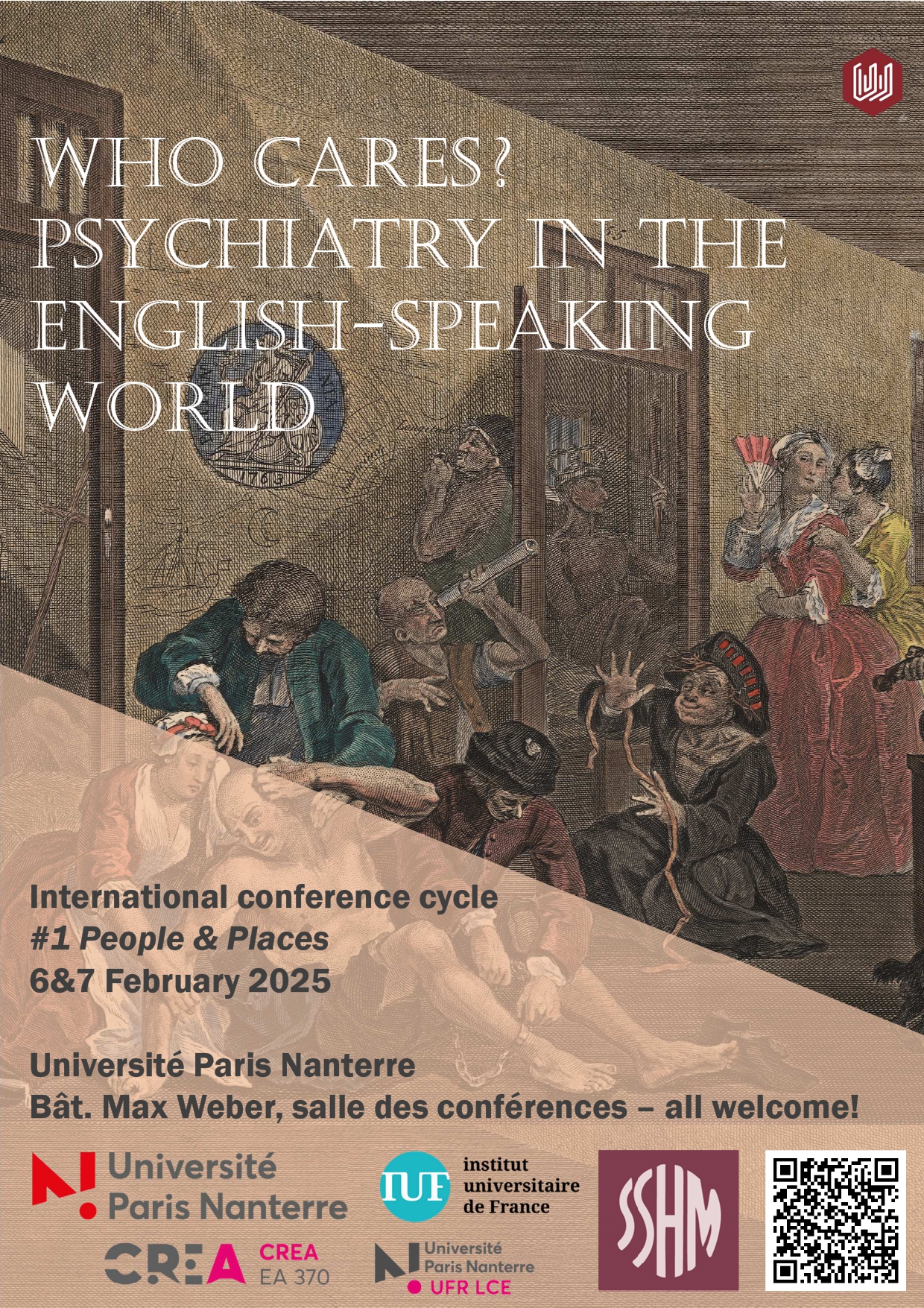
CONFERENCE PROGRAMME
Who Cares? Psychiatry in the English-speaking world:
People and Places
International Conference Université Paris Nanterre 6-8 February 2025
People and Places
International Conference Université Paris Nanterre 6-8 February 2025
Organising committee: Cécile Birks, Claire Deligny, Laurence Dubois, Elisabeth Fauquert (Université Paris Nanterre) & Laetitia Sansonetti (Université Sorbonne Nouvelle).
Scientific committee: Cécile Birks (Université Paris Nanterre), Claire Deligny (Université Paris Nanterre), Laurence Dubois (Université Paris Nanterre), Elisabeth Fauquert (Université Paris Nanterre), Hervé Guillemain (Université du Mans), Julie Le Gac (Université Paris Nanterre & Institut Universitaire de France), Fabienne Moine (Université Paris-Est Créteil), Michel Prum (Université Paris Cité) & Laetitia Sansonetti (Université Sorbonne Nouvelle).
DAY 1 : THURSDAY, 6 February 2025
Salle des conférences, Bâtiment Max WEBER, Université Paris Nanterre
8:45 – 9:15 Welcome & opening of the conference
9:15 – 9:30 Opening speech, Françoise KRÁL (director of the CREA research laboratory, Université Paris Nanterre)
9:30 – 10:30 KEYNOTE 1 Rory DU PLESSIS (University of Pretoria): “Humanising stories of care and connection: placing the chronic patients of the Fort England Hospital, South Africa, 1890-1950”
Chair: Michel PRUM (Université Paris Cité)
10:30 – 10:50 Coffee Break
10:50 – 12:50 Panel 1 – Racial bias, migration and psychiatry
Chair: Michel PRUM (Université Paris Cité)
10:50 – 11:10 Cécile BIRKS (Université Paris Nanterre): “ Segregation and racial bias in the Cape Colony mental institutions, 1890-1910”
11:10 – 11:30 Samantha HOSEIN (University of the West Indies): “St Ann’s Mental Asylum: External and Internal Determinants of Mental Healthcare Development in Trinidad and Tobago, 1900- 1939”
11:30 – 11:50 Léna MONEME (University of Luxembourg): “The repatriations of immigrant patients from the UK: administrative practices and psychiatric perspectives (1950s-1970s)”
11:50 – 12:10 Elodie EDWARDS-GROSSI (Université Paris Dauphine-PSL & Institut Universitaire de France) & Christopher D.E. WILLOUGHBY (University of Nevada, Las Vegas): “Thinking through carceral logics in psychiatry: revisiting race and marginality in the U.S. today”
12:10 – 12:50 Q&A
12:50-2 Lunch Break
2 – 3:30 Panel 2 – Outside the walls of mental health institutions
Chair: Elisabeth FAUQUERT (Université Paris Nanterre)
2 – 2:20 Laurence GERVAIS (Université Paris Nanterre): “Queering mental health: From pathologisation and backlash to mutual-aid and radical care”
2:20 – 2:40 Cecilia SMITH (Université Côte d’Azur): “Homelessness, psychiatric care and deinstitutionalization in Greater Boston since the 1960s”
2:40 – 3 Rebecca WYNTER (University of Amsterdam): “People Out of Place: Policing Mental Distress on London’s Streets since 1890”
3 – 3:30 Q&A
3:30 – 3:45 Coffee Break
3:45 – 5:45 Panel 3 – Psychiatry and war
Scientific committee: Cécile Birks (Université Paris Nanterre), Claire Deligny (Université Paris Nanterre), Laurence Dubois (Université Paris Nanterre), Elisabeth Fauquert (Université Paris Nanterre), Hervé Guillemain (Université du Mans), Julie Le Gac (Université Paris Nanterre & Institut Universitaire de France), Fabienne Moine (Université Paris-Est Créteil), Michel Prum (Université Paris Cité) & Laetitia Sansonetti (Université Sorbonne Nouvelle).
DAY 1 : THURSDAY, 6 February 2025
Salle des conférences, Bâtiment Max WEBER, Université Paris Nanterre
8:45 – 9:15 Welcome & opening of the conference
9:15 – 9:30 Opening speech, Françoise KRÁL (director of the CREA research laboratory, Université Paris Nanterre)
9:30 – 10:30 KEYNOTE 1 Rory DU PLESSIS (University of Pretoria): “Humanising stories of care and connection: placing the chronic patients of the Fort England Hospital, South Africa, 1890-1950”
Chair: Michel PRUM (Université Paris Cité)
10:30 – 10:50 Coffee Break
10:50 – 12:50 Panel 1 – Racial bias, migration and psychiatry
Chair: Michel PRUM (Université Paris Cité)
10:50 – 11:10 Cécile BIRKS (Université Paris Nanterre): “ Segregation and racial bias in the Cape Colony mental institutions, 1890-1910”
11:10 – 11:30 Samantha HOSEIN (University of the West Indies): “St Ann’s Mental Asylum: External and Internal Determinants of Mental Healthcare Development in Trinidad and Tobago, 1900- 1939”
11:30 – 11:50 Léna MONEME (University of Luxembourg): “The repatriations of immigrant patients from the UK: administrative practices and psychiatric perspectives (1950s-1970s)”
11:50 – 12:10 Elodie EDWARDS-GROSSI (Université Paris Dauphine-PSL & Institut Universitaire de France) & Christopher D.E. WILLOUGHBY (University of Nevada, Las Vegas): “Thinking through carceral logics in psychiatry: revisiting race and marginality in the U.S. today”
12:10 – 12:50 Q&A
12:50-2 Lunch Break
2 – 3:30 Panel 2 – Outside the walls of mental health institutions
Chair: Elisabeth FAUQUERT (Université Paris Nanterre)
2 – 2:20 Laurence GERVAIS (Université Paris Nanterre): “Queering mental health: From pathologisation and backlash to mutual-aid and radical care”
2:20 – 2:40 Cecilia SMITH (Université Côte d’Azur): “Homelessness, psychiatric care and deinstitutionalization in Greater Boston since the 1960s”
2:40 – 3 Rebecca WYNTER (University of Amsterdam): “People Out of Place: Policing Mental Distress on London’s Streets since 1890”
3 – 3:30 Q&A
3:30 – 3:45 Coffee Break
3:45 – 5:45 Panel 3 – Psychiatry and war
Chair: Hervé GUILLEMAIN (Université du Mans)
3:45 – 4:05 Rachel DITCHFIELD (University of Liverpool & the Imperial War Museum): “The impact of the First World War on the therapeutic spaces of Bethlem Royal Hospital”
4:05 – 4:25 Rob ELLIS (Manchester Metropolitan University) & Ute OSWALD (University of Huddersfield): “Asylum: Refugees and Mental Health. Belgians in British Asylums 1914-1918”
4:25 – 4:45 Julie LE GAC (Université Paris Nanterre & Institut Universitaire de France): “‘His Patient is the Army rather than the Individual’: Military Psychiatrists and British soldiers during the Second World War”
4:45 – 5:15 Q&A
5:15-5:30 – Break
5:30 – 6:15: Poster Presentation in the hall (Master’s Students from Paris Nanterre and Sorbonne Nouvelle)
6:15 Cocktail reception
3:45 – 4:05 Rachel DITCHFIELD (University of Liverpool & the Imperial War Museum): “The impact of the First World War on the therapeutic spaces of Bethlem Royal Hospital”
4:05 – 4:25 Rob ELLIS (Manchester Metropolitan University) & Ute OSWALD (University of Huddersfield): “Asylum: Refugees and Mental Health. Belgians in British Asylums 1914-1918”
4:25 – 4:45 Julie LE GAC (Université Paris Nanterre & Institut Universitaire de France): “‘His Patient is the Army rather than the Individual’: Military Psychiatrists and British soldiers during the Second World War”
4:45 – 5:15 Q&A
5:15-5:30 – Break
5:30 – 6:15: Poster Presentation in the hall (Master’s Students from Paris Nanterre and Sorbonne Nouvelle)
6:15 Cocktail reception
————————
DAY 2 : FRIDAY, 7 February 2025
Salle des conférences, Bâtiment Max WEBER, Université Paris Nanterre
9 – 9:15 Welcome coffee
9:15 – 10:15 KEYNOTE 2 Susan HOGAN (University of Derby & Institute of Mental Health, University of Nottingham): “Therapeutic Arts in Britain with a Focus on Britain’s First Arts-Based Therapeutic Community: Withymead”
Chair: Charlotte GOULD (Université Paris Nanterre)
10:15 – 11:15 Panel 4 – Art and creativity
Chair: Charlotte GOULD (Université Paris Nanterre)
10:15 – 10:35 Rachel WILSON (Goldsmiths, University of London): “Institutional Psychotherapy: mobilising aesthetic practice in contemporary mental health institutions”
10:35 – 10:55 Fabienne MOINE (Université Paris-Est Créteil): “‘The silver lining of the dark cloud of insanity’: asylums and ‘lunatic poetry’” (Britain, 1840s-1870s)
10:55 – 11:15 Q&A
11:15 – 11:30 Coffee Break
11:30 – 1 Panel 5 – Conceptualising places of care
Chair: Naomi TOTH (Université Paris Nanterre & Institut Universitaire de France)
11:30 – 11:50 Nicolas BOILEAU & Victoria FERNANDEZ (Aix-Marseille Université): “Don’t we all care? Thinking about the hospital as a place of commonality rather than as a common place”
11:50 – 12:10 Susan BARRETT (Université Bordeaux Montaigne): “Lost in Transition: Who cares about mentally-ill young adults?”
12:10 – 12:30 Louise HIDE (Birkbeck, University of London).: “‘Too passive to present any problem to management’: the psychiatric hospital as a technology of control”
12:30 – 1 Q&A
1 – 2:15 Lunch break
2:15 – 4:15 Panel 6 – Places of care in England
Chair: Anatole LE BRAS (Université Versailles Saint-Quentin-en-Yvelines)
2:15 – 2:35 Hilary MARLAND (University of Warwick): “‘Never in asylum before’: Mental Disorder and Childbirth in Colney Hatch Asylum, London, 1890s-1920s”
2:35 – 2:55 Han DEE (Queen Mary University of London): “Broadmoor: ‘It’s A Good Home Ain’t It?’ Approaching location to discover neglected histories”
2:55 – 3:15 Leonard SMITH, (University of Birmingham): “Family, Domesticity and the English Private Madhouse, 1600 – 1875”
3:15 – 3:35 Claire DELIGNY & Laurence DUBOIS (Université Paris Nanterre): “‘A kind and judicious chaplain may be a valuable auxiliary to the physician’ : Chaplains at Hanwell and Rainhill asylums (1838-1886)”
3:35 – 4:15 Q&A
4:15 – 4:30 Coffee break
4:30 – 6 Panel 7 – Early Labellings
Chair: Laetitia SANSONETTI (Université Sorbonne Nouvelle)
4:30 – 4:50 Louise FANG (Université Sorbonne Paris Nord): “Musgrave v. Mounson (1623): exploring the shortcomings of early modern inquisitions of lunacy”
4:50 – 5:10 Beatrice FUGA (Université Sorbonne Nouvelle): “Compulsive, Convulsive, Conniving. Eighteenth-century Nymphomaniacs in French and English Medical Texts”
5:10 – 5:30 Mathilde VIALARD (Université de Bourgogne): “‘Who cares’ about Hypochondria? An Overview of an Often-Forgotten Mental Disorder”
5:30 – 6 Q&A
6 – 6:40 Psychiatry on screen Chair : Serge CHAUVIN (Université Paris Nanterre)
6 – 6:20 Jocelyn DUPONT (Université de Perpignan): “Psychiatric Spaces in Early 1960s American Cinema”
6:20 – 6:40 Q&A
6:40 – 7 Closing speech, Who Cares? committee members
Dinner in town (conference delegates only)
DAY 3: SATURDAY, 8 February
Hôpital de la Pitié-Salpêtrière, Assistance Publique Hôpitaux de Paris, Bd de l’Hôpital, 75013 PARIS
10-12 noon Guided tour and conference (in English) of the Pitié-Salpêtrière Hospital (conference delegates only)
Mis à jour le 21 juin 2026
Responsables du projet
Consultez le blog du projet
Colloque "Who cares? Psychiatry in the English-speaking world: Theories and Policies", Université Paris Nanterre, 19-21 March 2026
Retrouvez notre appel à communication en cliquant sur le lien ci-dessous:
https://whocares.hypotheses.org/call-for-papers-theories-and-policies
Retrouvez le programme détaillé du colloque and cliquant sur le lien
[
https://whocares.hypotheses.org/call-for-papers-theories-and-policies
Retrouvez le programme détaillé du colloque and cliquant sur le lien
[